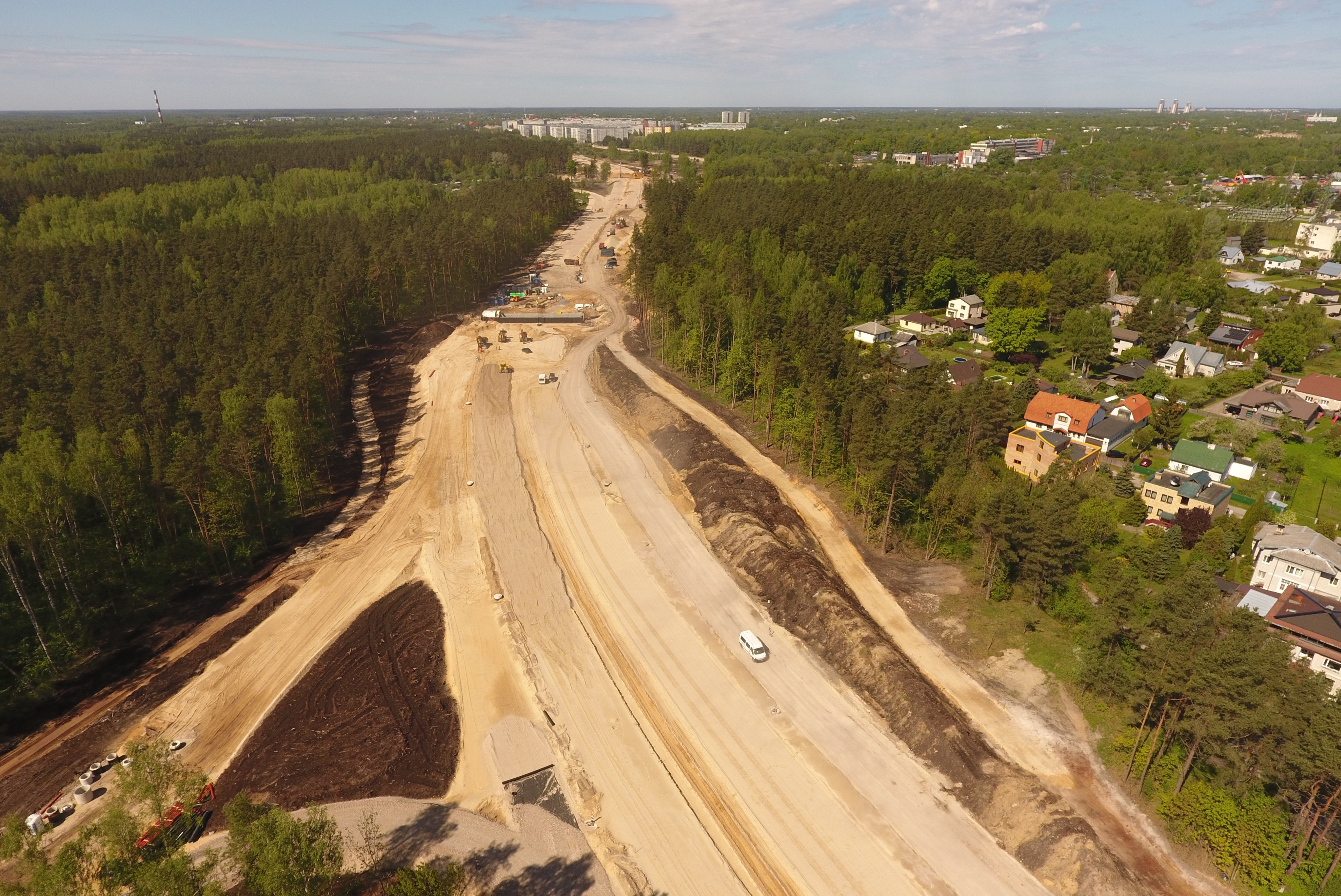
The future of land-use: ESPON experience for Latvian land management
Workshops
An event organized by the Latvian ESPON Contact Point
September 26, 2025 · 10:00am CET
Online
Online Event
On 26 September, the Ministry of Smart Administration and Regional Development of the Republic of Latvia (VARAM), acting as the Latvian ESPON Contact Point, hosted an online seminar titled “The Future of Land Use: ESPON Experience for Land Management in Latvia.”
This marked the fifth event organised under the ESPON 2030 programme in Latvia, bringing together representatives from municipalities, regional planning bodies, ministries, academia, research institutions, and other stakeholders to explore sustainable land use and the tools can that support it.
Focusing on No Net Land Take
A central theme of the seminar was the concept of No Net Land Take (NNLT) – the EU’s ambition to achieve zero net land take by 2050. This was discussed through the lens of ESPON’s SUPER and NNLT projects, as well as the forthcoming activities of the Interreg Europe project Green LUPO.
David Evers, Senior Researcher from the Netherlands Environmental Assessment Agency presented findings from the SUPER project, which reaffirmed that land take remains a significant challenge across Europe. He noted that while there is no universal solution to sustainable urbanisation, European policies and planning interventions play a critical role in shaping land use trajectories. He emphasised the importance of cooperation, coordination, and long-term vision, highlighting scenario modelling as a valuable tool for assessing the trade-offs and synergies of different development pathways – whether compact, polycentric, or diffuse.
Nicolas Rossignol, ESPON’s Assistant Director for Research & Policy, shared insights from the NNLT project, stressing that implementation of NNLT objectives varies widely across Europe due to differing governance structures. He argued that NNLT should not be viewed merely as a technical goal, but rather as a strategic instrument for the green transition and a catalyst for broader public policy reform. Achieving this, he said, requires strong cross-sectoral and horizontal collaboration.
Lessons from Lithuania
Associate Professor Erblin Berisha from Politecnico di Torino presented Lithuania’s experience with the SUPER spin-off project, which adapted the SUPER Guide on sustainable urbanisation to national planning practice. He explained that existing planning instruments and unintended consequences of other policies – such as housing subsidies – have encouraged dispersed development, leading to increased land consumption despite population decline. He stressed the need for a strategic national vision, place-based approaches, and coordinated cooperation to avoid fragmented, short-term interventions and manage competition between municipalities and sectors.
Latvia’s Land Use Challenges
Experts from VARAM noted similar trends in Latvia: a declining population is accompanied by a reduction in agricultural land, while built-up areas continue to expand, particularly in the Riga metropolitan area. Although the population there is growing, land is often used inefficiently, with low-density development and limited efforts to revitalise existing urban areas. To address these issues, VARAM representatives have joined the Green LUPO project to support the development of new land policy guidelines for the country.
Participants in seminar acknowledged that the NNLT concept was new to many, yet highly relevant. They recognised that land take is a pressing issue for Latvian municipalities, often resulting in irrational land use – such as constructing new housing, retail, or logistics facilities on greenfield sites, while vacant plots and unused buildings remain in urban centres. This trend increases demand for transport infrastructure and services, while land use patterns are further influenced by new renewable energy developments and changes in forest and agricultural land cover.
Key Takeaways for Latvia
Discussions with ESPON experts highlighted several important considerations for Latvia’s future land use policy:
- Sustainable land management should balance private property rights with the public interest.
- Planning restrictions should be clearly communicated to the public to raise awareness of their benefits.
- Fiscal and legal frameworks significantly influence land consumption and must be aligned with sustainability goals.
- Monitoring should include qualitative aspects of land take, not just quantitative measures.
- Environmentally beneficial strategies must also be economically viable.
- Policy change requires time and broad societal acceptance.
During the interactive session, participants proposed a communication strategy for NNLT in Latvia under the slogan “Growing by shrinking”, emphasising the need for more compact and thoughtful urban development. While various tools to reduce land consumption already exist in Latvia, efforts remain fragmented and strategic goals are often not fully implemented. To ensure effective delivery of NNLT, participants called for clear national objectives regarding land use, coherent land policy, and a shared spatial vision, supported by stronger cooperation between municipalities and sectors. They also stressed the importance of compensation mechanisms and greater involvement of regional authorities in land governance. Enhancing land take monitoring was also discussed, including the potential for citizen participation and the use of existing statistical and spatial data to build an integrated national monitoring system.
Looking Ahead
The seminar reaffirmed that sustainable land use is a complex challenge requiring multi-level and cross-sectoral collaboration, as well as greater public understanding. By drawing on ESPON research and the forthcoming results of the Green LUPO project, Latvia has a valuable opportunity to shape land use policy that supports the European Green Deal and promotes sustainable territorial development in the years to come.