
Integrated territorial development in lake regions in Europe
Article 174 of the TFEU states that: '’the Union shall aim at reducing disparities between the levels of development of the various regions and the backwardness of the least favoured regions. Among the regions concerned, particular attention shall be paid to rural areas, areas affected by industrial transition, and regions which suffer from severe and permanent natural or demographic handicaps such as northernmost regions with very low population density and island, cross border and mountainous regions’'.

MSP-LSI–on demand service for Luxembourg
This activity is based on the results of the targeted analysis project Maritime Spatial Planning and Land Sea Interactions (MSP-LSI) and has been commissioned by the ESPON EGTC for Luxembourg, as a member of the North Seas Energy Cooperation (NSEC). It was conducted following a request of the Ministry of Energy and Spatial Planning Luxembourg, in their role as a member of the North Seas Energy Cooperation (NSEC).
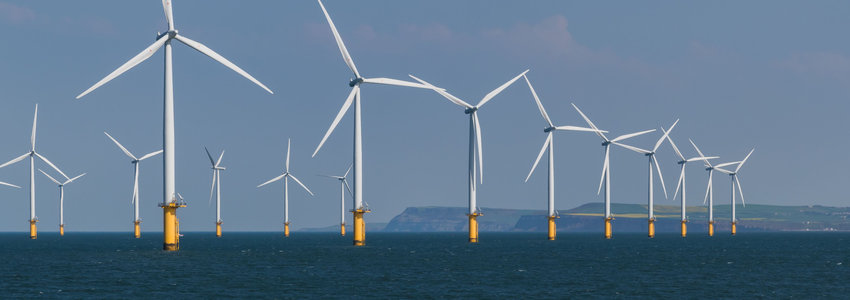
QGasSP - Quantitative Greenhouse Gas Impact Assessment Method for Spatial Planning Policy
Scope
European Union (EU) policymaking is reacting to climate change with increasing seriousness and urgency.
LAKES - territorial analysis of spatial progress and integrated development opportunities of large lakes in Europe
In the European Union there is not any specific approach developed for the integrated development for regions of large lakes, their social-economical space and catchment areas. This targeted analysis is aimed at overcoming that challenge and to provide to stakeholders’ regions and other regions in Europe recommendations for developing an effective spatial development tool for European large lakes.
METRO - The role and future perspectives of Cohesion Policy in the planning of Metropolitan Areas and Cities
Despite their importance in the development of the European territory, Metropolitan Areas and Cities are not the primary actors in the design of programmes and strategies to implement Cohesion Policy. The experience with the 2007-2013 programming period, showed that cities and urban areas were involved at the project level as beneficiaries.
STISE - Sustainable Transport Infrastructure in the Strategic urban region Eurodelta
- Read more about STISE - Sustainable Transport Infrastructure in the Strategic urban region Eurodelta
The Strategic urban region Eurodelta (SURE) comprises the lower river basins of the Rhine, Meuse and Scheldt. A polycentric area, comprising a network of metropolises with medium-large cities and cross-border regions. In its capacity of an entrance gate for goods and persons to Europe, it has developed into a densely populated and economically strong area.
IMAGINE - Developing a metropolitan-regional imaginary in Milan-Bologna urban region
- Read more about IMAGINE - Developing a metropolitan-regional imaginary in Milan-Bologna urban region
The Milano-Bologna urban region encompasses the metropolitan cities of Milan and Bologna and the provinces of Piacenza and Pavia, a strategic regional area across two of the most economically developed Regions in Italy. This area experiences important changes in terms of economic development.
ERMES - ESPON European Research for Maritime Eco(nomic)clusters governance Strategy
ERMES is focused on the reinforcement of land-sea interactions through policies and soft governance solutions that allow for the promotion of Blue Growth and the maximization of regional benefits of sustainable maritime spatial planning.
CE FLOWS – Spatial dynamics and integrated territorial development scenarios for the functional area of Central Europe
The Interreg Central Europe (CE) programme area encompasses the territory of nine EU Member States, i.e. Austria, Croatia, the Czech Republic, Hungary, Poland, Slovakia and Slovenia, as well as parts of Germany and Italy. It makes up 23% of the EU territory and covers countries from both sides of the former ’Iron Curtain’.
DIGIPLAN - Evaluating Spatial Planning Practices with Digital Plan Data
Digitalization in public administration is gaining momentum in many European countries and spatial planning is no exception. The digitalization process is driven by ideas of efficiency, expressed for example in the concept of “smart cities” and “digital governance”, ideas of participation and improved public service, like “open government” and “open data”, and an aspiration for new economic growth and business opportunities based on this data. The topic of this ESPON Targeted Analysis is highly relevant as digitalization plays an increasing role also in spatial planning.
